
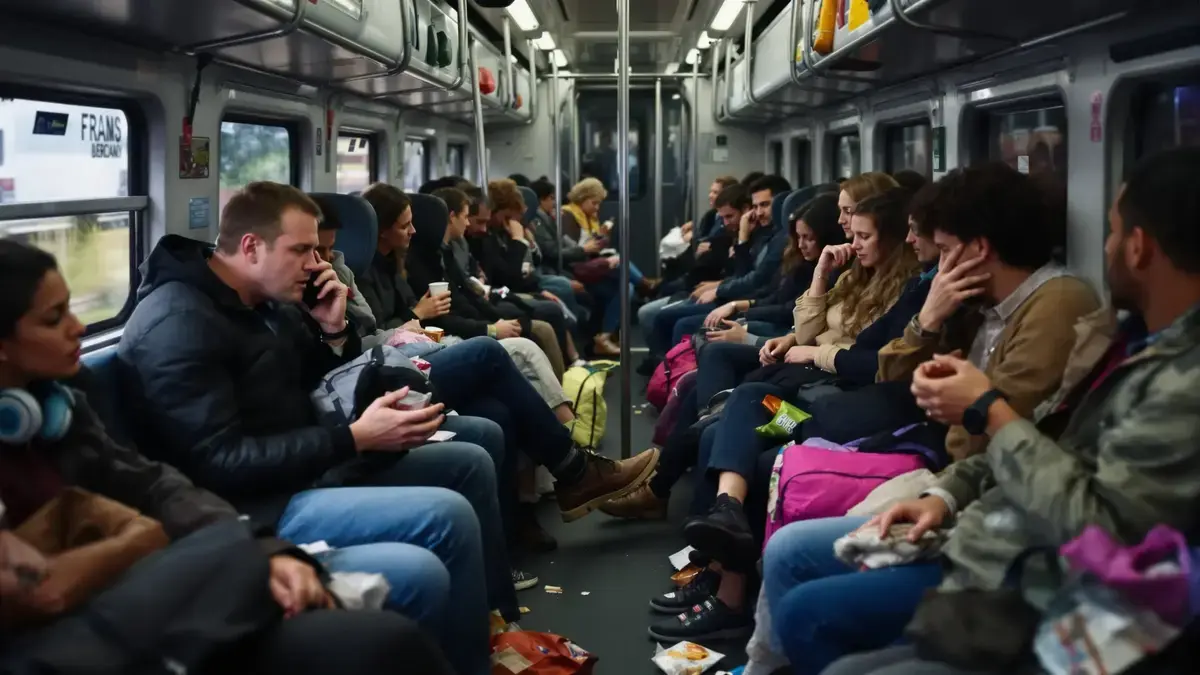

A crowded train rattles forward, heat pressing in as a traveler fumbles for their headphones—too late to block out a loud phone call echoing through the carriage. Scattered bags take up spare seats, a stray sneaker pokes into the aisle. These ordinary travel moments hide a puzzle: common acts, rarely questioned, quietly corrode the comfort of everyone in transit.
Everyday Incivilities: Small Acts, Big Impact
Within the familiar scenes of airports, train stations, and buses, a surprising truth emerges—most travelers acknowledge their own lapses in etiquette. Whether it’s a whispered admission of removing shoes mid-flight or the habit of taking a phone call on speaker, these behaviors are no strangers to even the most seasoned globetrotters. Yet, irritation builds quickly when someone else repeats the same act.
Minor disruptions add up: an elbow that crosses the shared armrest, music drifting into an unwilling ear, snacks consumed loudly just as fatigue sets in. A beach with overlooked wrappers, or a buffet moment where eyes widen at an overflowing plate, both linger in memory long after the trip is done. Seemingly harmless, these actions weigh on the fragile balance of comfort and civility.
The Boundary Between Private and Public
Travel blurs personal space. The urge to seek comfort—reclining seats, sprawling with luggage, finding moments for personal rituals—means private actions spill into shared environments. What soothes one person, like removing shoes or stretching across two seats, may be a subtle affront to another struggling to find room.
Coughs unguarded, laughter that rises above the soft hum of conversation, and applause at landings all contribute to a sense of collective unease. Small lapses, especially in hygiene or respect for physical boundaries, transform the journey for many from smooth passage to tense negotiation.
Cultural Tensions and Shared Annoyances
These challenges do not belong to any one nation. In surveys from Europe to Asia and across English-speaking countries, the same irritants resurface: discarded trash, overly loud conversations, and disregard for public hygiene. Preferences vary—some travelers are especially bothered by beach pollution, others by excessive seat tilting or disruptive calls.
Still, nearly everyone admits to having contributed, often more than once, to the very behaviors that provoke frustration. Noise and crowding seem to be universal triggers, making quiet or courteous moments feel rare and precious.
When Patience Runs Out
As crowds increase in trains, airports, and waiting halls, so does the likelihood of confrontation. Travelers rarely hesitate to ask someone to turn down the volume on a device or move their luggage. Tolerance for incivility has a limit, and even the most understanding among us find themselves compelled to restore some order—even after recognizing their own past slip-ups.
Curiously, the repetition of these acts is driven in part by social contagion: seeing others ignore norms often removes the last barrier to breaching them ourselves. The chain reaction turns travel companionship into a recurring test of goodwill and patience.
The Digital Divide and Performative Journeys
Screens flicker everywhere. Vacation snapshots are staged before the landscape itself is enjoyed, and attention drifts from shared spaces to private feeds. The result is a subtle disconnect: a room full of travelers, present physically but detached in mindset, often missing the textures and rhythms of the journey in pursuit of perfect digital souvenirs.
Digital distractions also feed small lapses—voices rise, headphones are forgotten, everyday awareness blurs. The gap widens between those seeking collective ease and those wrapped up in their own bubble.
Simplicity in Solutions
Despite these frictions, the steps to ease shared discomfort remain simple. Respect for personal space, a quick nod to using headphones, and a moment to lower one’s voice can change the entire mood of a group. Preparing for travel—a seat reserved, snacks packaged quietly, logistics checked in advance—often requires less effort than the aftermath of conflict.
As one phrase puts it, “No one wants to begin a trip as someone else’s nightmare.” Yet the contradiction persists: knowledge doesn’t always translate into action, and bad habits take root fast.
Looking Beyond the Surface
Travel, in its crowded and unpredictable reality, tests not just patience but an unspoken social contract. The rules are simple, but abiding by them when stress is high proves elusive. When the journey ends, what lingers is often not the scenery, but those brief moments—a cough, a loud laugh, a trail of litter—that defined the space we all shared. In this, the understated rudeness of travel remains both familiar and quietly underestimated.
