
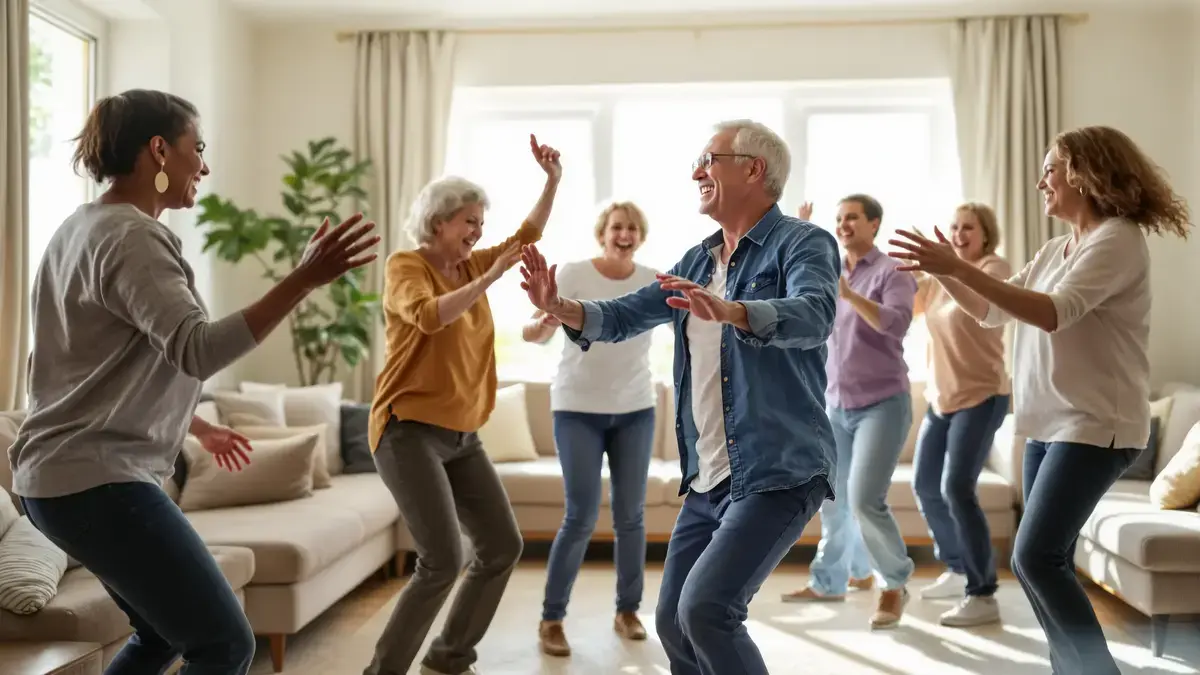

A living room, furniture nudged aside, fills with laughter and moving feet. The music shifts—a cue for concentration and memory. Here, while bodies swing to rhythm, something quiet but profound is underway: a gentle challenge to old ideas of brain aging, revealed by recent science.
The Quiet Power Behind Moving to Music
Under ordinary light, physical exercise is already an ally for the body. But dance does more. Unlike routine workouts, dance asks you to remember steps, adjust your balance and move in sync with sound. The brain must learn, adapt, and coordinate—often at the same moment. This is not mere repetition, but real-time creativity.
It’s the complete engagement—memory paired with movement, rhythm steering attention—that leads experts to call dance a unique brain workout. Shuffling through a routine, attention sharpens and recall strengthens. Every session is a surprise test, never quite the same as before.
A Workout Inside and Out
Science draws the map: dance activates multiple parts of the brain all at once. Regions responsible for balance, timing, multitasking, and social connection fire together. This broad activation goes beyond what a treadmill or bicycle offers. Dance is not just cardiovascular—it's cognitive.
Neuroscientists call this plasticity. Each sequence learned, every step adapted on the fly, builds new connections between brain cells. The process unfolds quietly but steadily, forging pathways that help memory and focus.
The Social Thread and Mental Health
Beneath the surface, another force moves. Dancing with others means more than shared music; it taps into social bonds. Group rhythm, even simple clapping or turns, boosts interaction. These moments lower stress. Endorphins—the brain’s feel-good chemicals—rise quietly, supporting long-term mental health.
No need for high performance. The science is clear: moderate, regular practice is enough. Several sessions a week, even brief, start the change. Memory sharpens. Attention lingers a little longer on daily details. Over time, enjoyment and routine matter as much as duration.
Beyond the Numbers: Rethinking Aging
Modern research now points to a striking conclusion: long-term dance can slow brain aging more effectively than other activities. It hints at measurable changes—not just in movement, but how the brain ages, with some findings suggesting a difference equivalent to several years.
Pleasure becomes the anchor. People stick with what they love. The more enjoyable the experience, the more likely it is to continue, quietly compounding the benefits. In living rooms, dance halls, and community centers, the evidence grows with every step: the brain, like the body, has ways of staying young—some, deceptively simple.
The Rhythm of New Understanding
What was once thought inevitable—brain aging as a slow decline—now faces a rethink. Dance, with its blend of challenge, memory, and joy, carves out a new possibility. As more uncover this layered benefit, the shape of ordinary movement shifts: from pastime to the quiet keeper of cognitive youth.
