
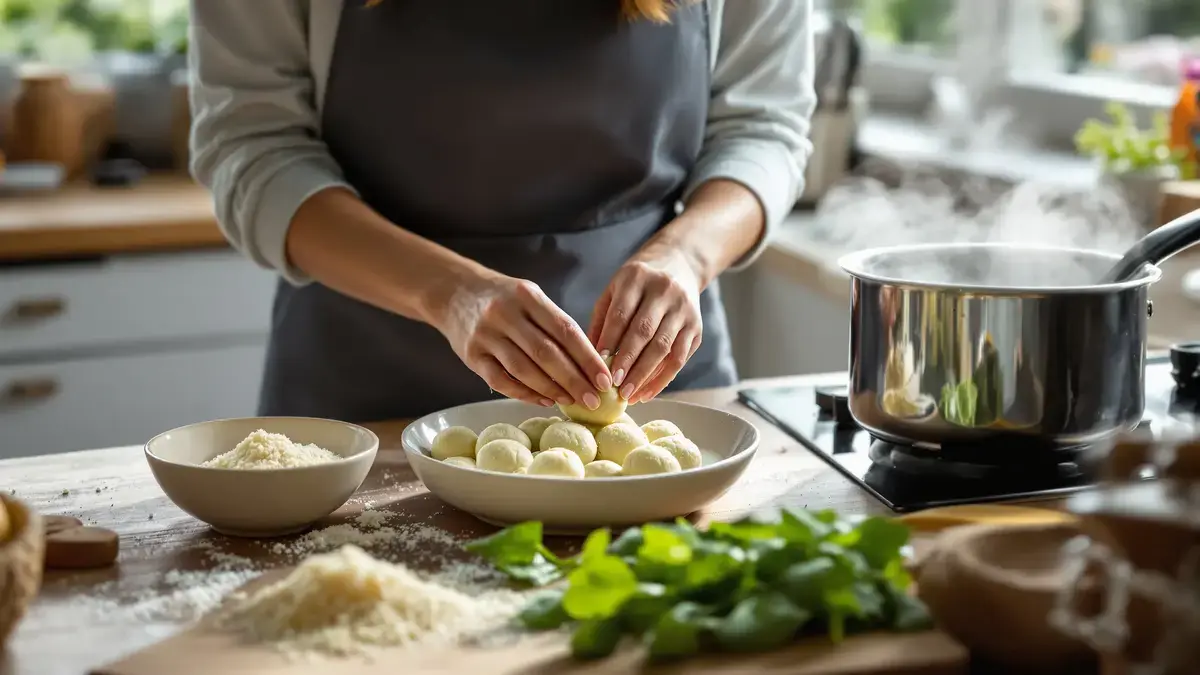

A kitchen counter scattered with just a handful of ingredients. A pot of simmering water sends gentle wisps of steam into the air. The usual layers and fuss of classic ravioli have faded. Instead, something lighter, softer is about to take their place—airy green and white dumplings, ready in under half an hour, with surprising simplicity at their core.
Letting the Filling Shine
Dishes once defined by their sturdy dough can, on weeknights, feel like too much. Here, the focus shifts. Picture skipping the rolling pin and the step-by-step choreography of pasta sheets. The essence of filled pasta becomes front and center: a mixture of ricotta and spinach, transformed into dumplings known as gnudi.
Five Ingredient Ease
All it takes: ricotta, cooked spinach, fine semolina, grated parmesan, and an egg. No dough to knead, no waiting for rest times. The spinach, barely warm and squeezed of its last drops of water, is chopped fine—nearly becoming a part of the cheese itself. This makes the mixture smooth and moldable, avoiding any unwanted clumps.
The Texture Shift
If you've ever bitten into ravioli, you know the familiar firm boundary of pasta. These dumplings are different. With no outer casing, the mouthful is all about the filling—delicate and yielding, never chewy. The semolina, crucial here, absorbs stray moisture, ensuring the dough comes together without falling apart.
Quick Assembly, Gentle Cooking
Forming the mixture is almost meditative—small walnut-sized balls, cool and moist to the touch. Rolling them between damp hands keeps surfaces smooth, then a dusting of semolina prevents any unwanted sticking. They don’t crowd each other on the waiting plate.
A pan of salted water heats, never bubbling harshly but kept just below a boil. As the gnudi slide in, they rest at the bottom, then rise softly to the surface—a quiet signal that they're done after just a few minutes. Working gently here preserves that fragile texture.
Nutrition with Comfort
The swap from pasta to "naked" filling results in lower carbohydrates, extra protein, and a bigger helping of vegetables. These dumplings provide substance, not weight, and their creamy, mild taste often wins over those uncertain about spinach. There's a quiet versatility, too: vegetarian and suitable for days when something fresh but filling is needed.
Italian Tradition, Streamlined
Traditionally, gnudi pair well with a simple sage butter or a homemade tomato sauce. A drizzle of olive oil and a flurry of parmesan shavings finish the plate. Tomato’s acidity lifts the creamy filling, making each bite both vibrant and soothing.
Presented simply, the dish recalls an Italian trattoria—warm, unpretentious, and rooted in familiarity. It’s easy to imagine sharing them at the table, their gentle flavors balanced by a bright sauce, a crack of black pepper, and the subtle richness of olive oil.
A New Weeknight Staple
For those tired of store-bought pasta and hungry for quick comfort, gnudi bring creative relief. Their gentle assembly and unique, cloud-like bite offer something quietly special. The meal nods to Italian roots while embracing the spirit of seasonal change and kitchen minimalism.
As the days lengthen and the kitchen windows catch more sunlight, such simple transformations invite a softer, fresher approach to everyday meals—proof that familiar comfort can look and taste lighter, yet still satisfy.
