
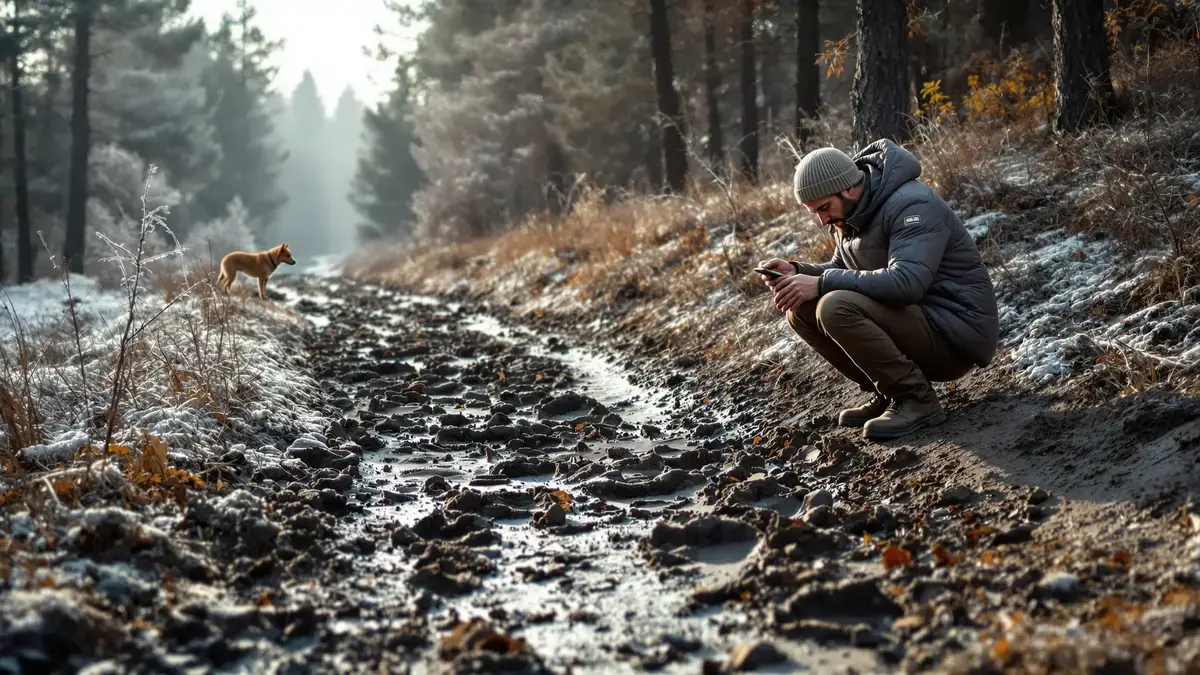

On a cold morning in northern Greece, animal tracks cross a dusty path at the edge of a pine forest. At first glance, nothing seems unusual—until a closer look reveals an unlikely blend of wildness and familiarity carved into the mud. Here, the invisible line between domesticated and wild has blurred, bringing fresh urgency to how we understand the legacy of wolves and dogs.
The genetic bond beneath fur and fangs
It’s common to glimpse stray dogs moving through rural outskirts, their fur thick against the wind. Hidden among them, a genetic puzzle has surfaced. Despite tens of thousands of years of separate lives, wolves and dogs are connected by almost identical DNA—99.9% the same.
They parted ways from a now-extinct gray wolf ancestor between 27,000 and 40,000 years ago. Even after centuries of domestication and adaptation to human lives, the two species remain so close genetically that their offspring are not just possible, but fertile.
In the contact zone: a hybrid emerges
In the wild hills of Greece, researchers recently uncovered a hidden hybrid. Not by looks—genetics told the story. DNA analysis on local specimens revealed one animal with a genetic make-up crossed almost evenly: 55% dog, 45% wolf.
Such hybrids often go unnoticed in the field. Appearance alone can be misleading. Some dogs, rough-coated and wary, resemble wolves to an untrained eye. Some wolves bear traits that echo northern dog breeds. Genetics alone made this discovery certain.
Boundaries: more porous than imagined
Wolves, naturally territorial, usually keep their distance. Once a year, breeding season calls them together, but the presence of millions of stray dogs nearby increases the odds of accidental unions. Since a hunting ban in the 1980s, wolf numbers have risen. Strays have never truly left.
Here, contact points between roaming dogs and territorial wolves are real. These landscapes of encounter create opportunities for genes to flow across what many once thought was an unbreakable border between wild and domestic.
What hybridization tells us now
The living hybrid highlights an often-overlooked fact: domestication changed behavior and form but never formed a true species wall. That boundary is more a gradient than a sharp line. When wolves and dogs share space, the possibility of hybrid young emerges naturally.
For those working to conserve wild wolves, this is more than a curiosity. Fertile hybrids can introduce dog genes into the wild, subtly altering traits vital for survival. Over time, this blending could reshape wild populations.
Adapting how we protect and understand
With hybridization an ongoing reality, conservation must adjust. Modern DNA tools are now central—not only to distinguish between wolves, dogs, and hybrids, but to guide management policies as these populations change.
This Greek hybrid stands as a sign of evolution happening right where human worlds and wildness collide. Monitoring these interactions helps protect the integrity of wild wolves and shapes how species boundaries are viewed going forward.
The interplay of wolf and dog, visible in a single set of tracks, is a reminder of the dynamic nature of life at the margins of civilization. Knowledge of this genetic blending shifts not only conservation strategies but also the way the wild and the domestic are understood—in science and beyond.
