
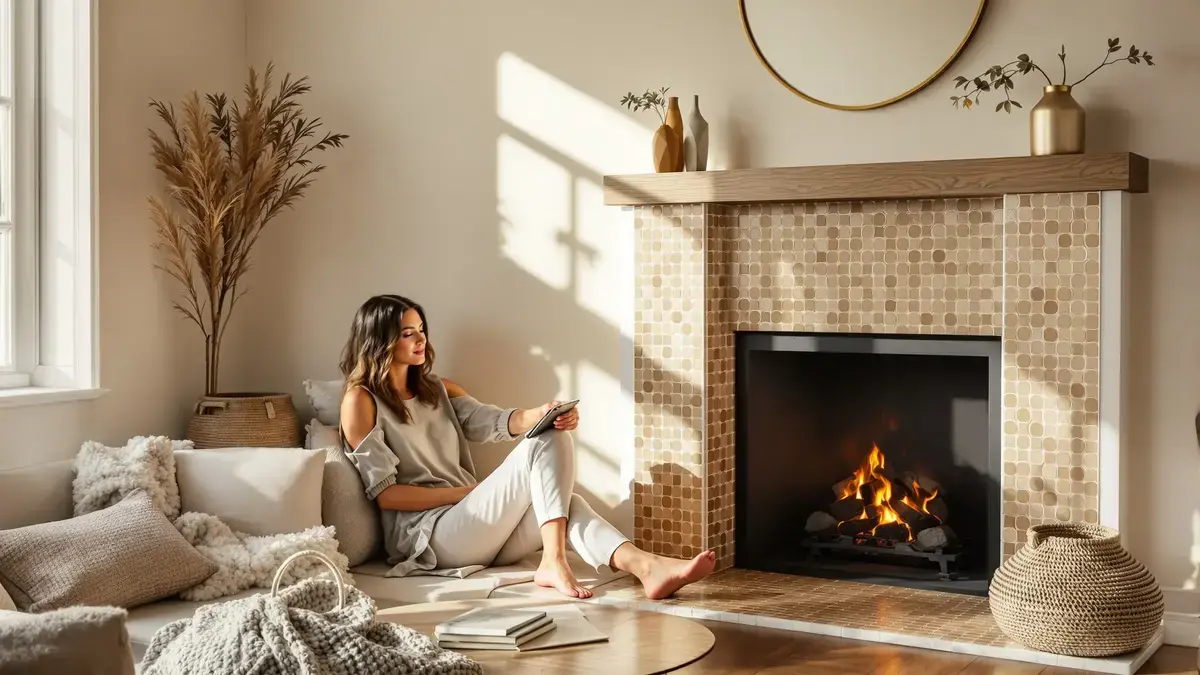

On a frosty evening, the familiar glow of the fireplace instantly draws focus as the room hushes to the scratch of logs settling. Yet, for all their warmth, many fireplaces feel fixed in the past—solid, heavy, visually anchored in another era. The urge to refresh them often fades with the thought of mess and major renovations. But a quieter transformation is possible, one that shifts ambiance with far less effort than most imagine.
A Shift in Material, Not in Walls
The idea that a fireplace needs to be torn down to look modern is persistent—and misplaced. Instead, a new wave of surface transformations is emerging for 2026, placing emphasis on material, light, and subtle luxury. Instead of demolition, the change comes with a layer: zellige tiles. Handmade, each zellige is a fragment of glazed Moroccan terracotta, unique in its undulating surface and delicate imperfections.
Step into a living room where the sun cuts weakly through the window; you'll see these tiles flicker softly, catching what little daylight is left. The effect is not a shiny veneer, but a shifting, textured skin that replaces that static monolith with something that feels alive. No structural work, no dust—simply a new “coat” laid over the existing hearth.
How the Fireplace Becomes Dynamic
Traditional fireplaces often dominate a space with stone or concrete mass. But, with zellige, what once felt imposing becomes visually lighter. Their handmade glaze both absorbs and reflects, creating shadows and glimmers even when the day is fading. This quality gives the surface movement—there is a low-key vibrancy you notice when crossing the room or settling by the fire in the early dusk.
There’s more than one way to apply this material. Some choose an all-over approach, covering the entire structure from mantle to floor for a crisp, nearly architectural impact. In rooms where minimalism reigns, this quiet statement reads as composed rather than stark. Others opt for a vertical band—a single stripe drawing the eye up, lending height and definition to the wall.
Minimal Moves, Maximum Effect
Sometimes only the fireplace opening is lined, forming an understated frame. Or just the hearth base wears zellige, its sheen paired with soft, matte limewashed walls for a layered texture. Each style works to break up the monotony and emphasize depth over surface flatness.
Choice of color matters, too. The new direction moves away from cool grays and toward warm, lived-in tones: pearly off-whites, cocoa brown tinged with pink, lush bottle green, and sandy beige. These hues catch and soften the light, giving the room a clarity and coziness that lasts beyond fleeting trends.
The Importance of Detail
Achieving the intended effect comes down to rigorous attention to finish. Tile joints must be fine and color-matched, allowing the eye to linger on the variation of each handmade piece instead of being distracted by a grid. Any effort to flatten or correct the irregularities would erase their charm; the goal is to let the material’s fractured reflections do the work.
Nearby, restraint is key. The tactile depth of zellige stands out best against simple surroundings: pale wood, brushed brass, wall finishes in breathable matte. The overall result is a space that calms, rather than crowds, with furnishings and objects selected for purpose as much as for beauty.
A Contemporary Heart for the Home
Little is as elemental as the home’s hearth, especially in winter. Giving it a new surface—something that shifts gently with every change in light—can return a sense of presence to a familiar room. The right materials don’t just renew, they build character that lingers, offering luxury without extravagance.
This quiet shift, minimal in intervention but wide in impact, offers a reminder: transformation is often about observing what’s already there, and letting light and texture do the rest. A subtly reimagined fireplace, aglow in both daylight and firelight, becomes not only a warmer gathering spot but a quietly modern anchor for the entire space.
