
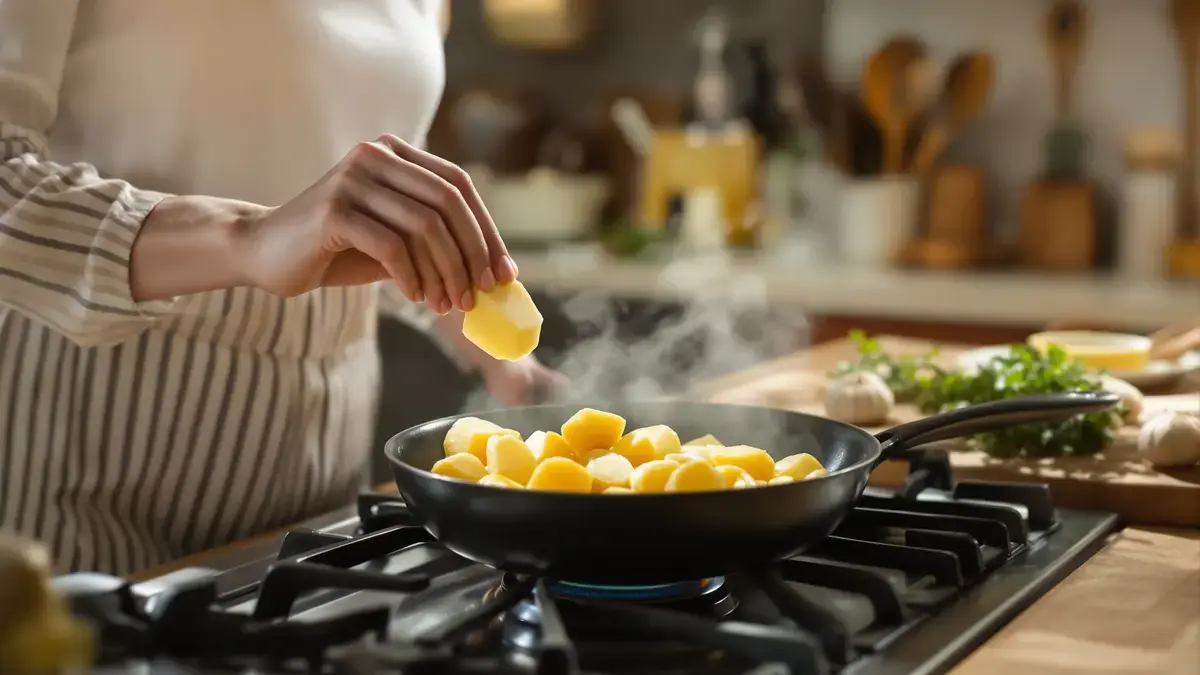

A kitchen fills with the warm scent of potatoes slowly sizzling, their edges catching the light as steam rises. There’s a quiet trick, almost hidden in the rhythm of cooking, that transforms these simple tubers into something tender and irresistible. The secret lies close at hand—revealed not in complicated technique or extravagant seasonings, but in the careful timing of one familiar ingredient.
The Quiet Power of Butter, Perfectly Timed
A saucepan sits on the stove, potatoes turning gold beneath a measured hand. The key is butter—not just as a topping, but as an essential partner during the cooking process. Added at the right moment, butter blends with natural cooking juices, a whisper of garlic, a scatter of herbs and salt. Together, they wrap each potato, coaxing out softness within, depth of flavor, and gentle color.
When introduced midway or near the end, butter doesn’t scorch. It melts, pours over each piece, and draws out both the starch’s creaminess and the sharpness of herbs. The change is felt at the table: potato that’s lush inside, golden outside, the aroma lingering in the air.
From Skillet to Oven: Three Approaches, One Principle
Weeknight meals often call for speed. The pan method answers that need. Thickly cut, firm potatoes (such as Charlotte or Nicola) go from towel-dry to sizzle in olive oil on medium heat. As they soften and their surfaces brown, heat lowers and butter joins, with garlic and thyme following. The mixture infuses gently, soaking in just at the point when the potatoes yield but still keep structure. A flick of pepper before serving, a drizzle of buttery juices—the result is crisp-edged, velvet-centered, with a savory aroma that signals home.
In the oven, the rhythm is slower, the payoff a crisp-then-soft contrast. Potato wedges tossed in oil, salt, paprika, and herbs roast spaced apart. Only after a light golden crust forms do cubes of cold butter tumble over, melting as heat continues. That moment lets the richness seep inside without burning. Minutes later, the potatoes emerge with a delicate shell and plush interior. A handful of fresh herbs at the finish adds brightness and visual appeal.
Some nights call for gentler comfort. The boiled method starts with potatoes quietly simmering in salted, herbed water—bay leaf, thyme, garlic giving character early on. Once just tender, heat turns off; the still-hot pan receives butter and olive oil. A careful toss covers each potato in gloss, letting the warmth meld butter into every crevice. The result veers far from plain: subtly perfumed, plush potatoes able to stand beside any dish.
Adapting Flavor, Avoiding Pitfalls
The technique is adaptable. To sharpen aroma, fresh parsley and a last-minute grating of raw garlic can be stirred in. For a sunlit, savory edge, the Mediterranean way brings sun-dried tomatoes and lemon alongside rosemary. Cheese—just Parmesan or Gruyere—can swirl into hot, buttered potatoes, melting in without becoming stringy or overpowering.
Restraint matters. Too much heat causes burning before tenderness. Crowded pans undo the faint crunch. Butter added early at high heat burns; added late and carefully, it perfumes. Gentle, infrequent stirring preserves form and encourages even browning.
The Small Shift with Big Impact
The act itself is simple, but the effect is clear to both eye and taste. Adding butter at the right moment elevates potatoes from background to centerpiece, no matter the method. The change is tactile—golden, aromatic, with an inside that breaks apart softly under a fork. On any table, familiar ingredients, given the right attention and timing, reveal unexpected potential.
