

In the cool hush before sunrise, a blackbird perches atop a garden wall. The air is still, the first blue of dawn barely perceptible. Yet, from this silhouette, a song rises—clear, deliberate, as if marking the quiet world awake. Behind this familiar melody lies a complex daily routine, shaped by light and the ever-shifting needs of survival. Beyond its morning music, what really fills a blackbird’s day?
Territorial Singing at First Light
Before most have stirred, the male blackbird takes to his favorite perch. The dark plumage and yellow-orange beak become visible only as the light creeps in. His song cuts through the silence, not just to announce his presence, but to defend territory and entice a mate. Each phrase is unique, sometimes reflecting regional differences, and hints at the bird's health and vitality.
In urban areas, artificial light pollution often prompts earlier singing. Still, as the sun lifts, the music fades. For the blackbird, other needs quickly take priority.
Foraging: Precision on the Ground
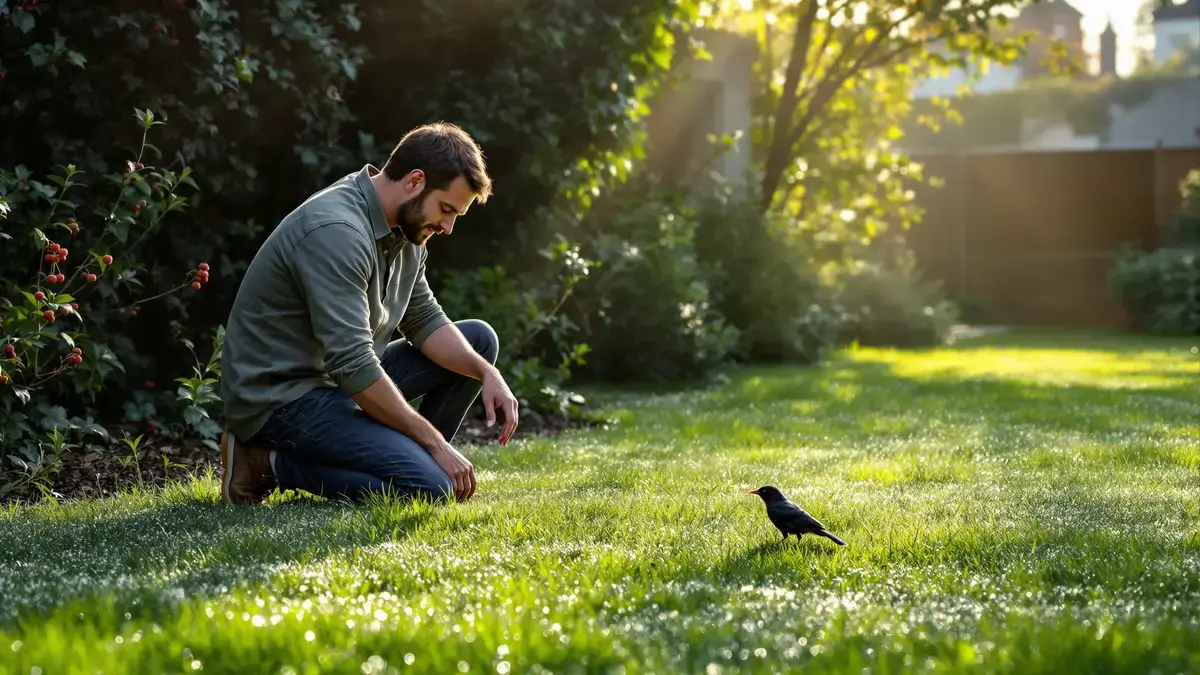
Mid-morning casts new energy over gardens and parks. The blackbird shifts from singing to methodical foraging. On dew-damp grass or soft earth, he paces in quick, measured steps. Pause, then a sharp stab of the beak—a worm or insect is pulled from the soil.
Their senses are finely attuned; acute hearing helps them detect subtle movements beneath the ground. Earthworms, insects, and snails become staples, especially in spring, when growing chicks demand protein. As seasons turn, blackbirds adapt—berries and fruits dominate the menu in colder months when animal prey is scarce. The pattern is the same, but the diet shifts quietly with the landscape’s offerings.
Midday Maintenance and Rest
By noon, with activity peaking, the blackbird slows down. In a patch of sun or beneath a leafy hedge, he preens each feather carefully. The act is not just grooming; it’s crucial for waterproofing, insulation, and parasite control.
On hotter days, you might spot a blackbird with wings spread, feathers slightly raised—a subtle “sunbathing” that aids thermoregulation. Movement lessens; energy is conserved for the active hours ahead. Short breaks in shade or near water are vital, especially when warmth lingers in the air.
Afternoon: Territory and Family Duty
As the light softens, movement resumes. Blackbirds patrol their chosen space—sometimes a patch of forest floor, other times a well-kept urban lawn. The male’s job intensifies in the breeding season, watching for rivals and protecting nest sites.
Defense is not just the work of the male. Females are fierce near the nest, ensuring safety against other blackbirds seeking shelter. Now and then, scuffles break out—quick, physical, and surprisingly intense for such a familiar songbird.
Parental care dominates once eggs hatch. Both parents visit the nest repeatedly—sometimes up to 300 times a day—delivering food to hungry chicks. Prey is often softened first, each feeding a small but vital gesture toward the fledglings’ survival.
Evening Calm and Nighttime Rest
As daylight wanes, the atmosphere in the garden shifts. Foraging slows, quiet calls replace earlier songs, and blackbirds seek dense shrubs or evergreen shelters. Here, they settle in, motionless, for the night.
There are no deep sleep cycles; instead, blackbirds rely on the changing light to regulate rest. Their energy reserves are managed carefully, tied closely to the day's length. As spring and summer nights shrink, activity stretches longer; in winter, daylight compresses their routines, demanding efficiency.
Living Alongside Us
City parks and rural hedgerows alike offer blackbirds a mosaic of habitats. They flourish where there is vegetation, water sources, and plenty of invertebrate-rich ground. Urban lights can stretch their routines, particularly their singing, but their fundamental needs remain tied to the rhythm of natural days and nights.
Maintaining a healthy blackbird population requires more than admiration for their song. Gardens with a mix of plants, minimal pesticides, and safe nesting sites support both their daily rituals and the life they bring to neighborhood dawns.
A Consistent Adaptation
The life of the blackbird is a blend of routine and response—each day reshaped by season, weather, and changing landscapes. Their adaptability is visible in every corner—on hedges, atop roofs, beneath shrubs—quietly reminding us that their survival depends as much on daily habits as on the song that so often signals the start of day.
