
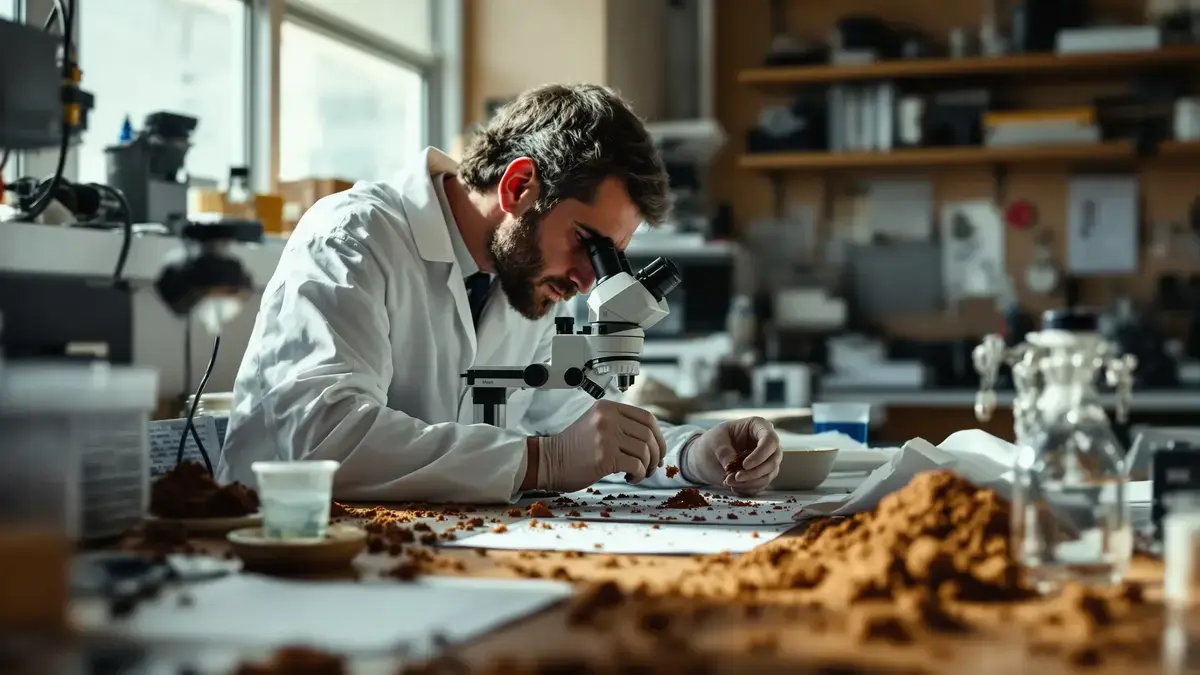

On a desk under a small lens, a tardigrade—so-called “water bear”—wriggles through grains of simulated Martian dirt. The tiny creature seems unstoppable, outlasting radiation, surviving the vacuum of space, thriving where few others can. Yet here, amid the red grit meant to mimic Mars, something unexpected happens. In just two days, the tardigrade slows, then stops, halted not by freezing or pressure, but by a soil no Earthling would call home.
A Barrier Hidden in the Dust
Ordinary sand between your fingers feels lifeless, inert. On Mars, the situation is different. The red soil, or regolith, is loaded with minerals that actively attack living cells. Scientists found that when tardigrades are placed in this simulated Martian mix, their legendary resilience fades within 48 hours. They lose movement. Some choke as mineral particles clog their mouths, no longer able to feed or crawl.
This isn’t just dryness or lack of air. The soil’s chemistry acts fast and rough, overwhelming the tardigrade before it can slip into its famed dormant state. It turns out, Mars is more than cold and empty—it’s chemically aggressive in ways never fully grasped from afar.
The Paradox of Water
A twist emerges, almost mundane in its simplicity. When the researchers rinsed the Martian soil from the tardigrades using nothing but plain water, the creatures snapped back to life. The toxic threat wasn’t permanent; it was merely sticking to their bodies, soluble and removable. This detail brings a new perspective: water is both a necessity and a danger.
On Mars, if water seeps into the regolith, the chemical defenses that shield the planet from imported life forms could be neutralized. Suddenly, what was a harsh barrier becomes a gateway. Essential for farming and living, water also opens the door to contamination, blurring the line between resource and risk.
Invisible Frontiers for Life
Back on Earth, the situation feels clear-cut: we keep clean rooms and biohazard procedures for space probes, hoping to avoid any hidden stowaways. But Mars presents a fresh puzzle. Its regolith acts as a natural firewall, strong enough to defeat even a tardigrade—creatures often cited as champions of survival.
Yet, the safety net is fragile. If human activity brings moisture, regions once sterile could quickly become hospitable to hardy Earth microbes. Some patches of the Martian surface may be more “leaky” than others, depending on subtle mineral differences. Even the most robust sentinels have limits, and Mars probes them sharply.
Engineering Beyond Biology
Labs can’t capture every threat. On Mars, variable pressures and ultraviolet radiation add layers to the already complex picture. For now, tests are carried out in controlled rooms, using regolith made from carefully matched Earth minerals. Still, even there, the hostile chemistry succeeds where deep-sea, frozen tundras, and the vacuum of space fail.
Solutions will have to go beyond biology. Isolated, tightly sealed biomes could keep water and nutrients from leaking into Martian ground. Meticulous biosecurity protocols may become routine, not just for planetary protection, but for our own. Any breach risks introducing new players to long-stable Martian chemistry—and possibly mixing them in ways impossible to predict.
Preparing for Subtle Contamination
The study of tardigrades reveals more than a single species’ threshold. It highlights hidden dynamics: the delicate interplay between chemicals, minerals, and the needs of life. Even with lifeless soil, dormant water, and harsh light, surprises abound. The next lesson may emerge, not from a spectacular event, but from a shift that started small—like a tardigrade paused among Martian sand.
The notion of indestructible life doesn’t hold up against the specifics of alien soil. Mars’ chemical shield reminds us: planning for interplanetary life demands technical ingenuity and respect for the details. As ambitions for colonization move forward, the difference between safety and contamination will rest on choices made before the first grain of regolith is touched by water.
