
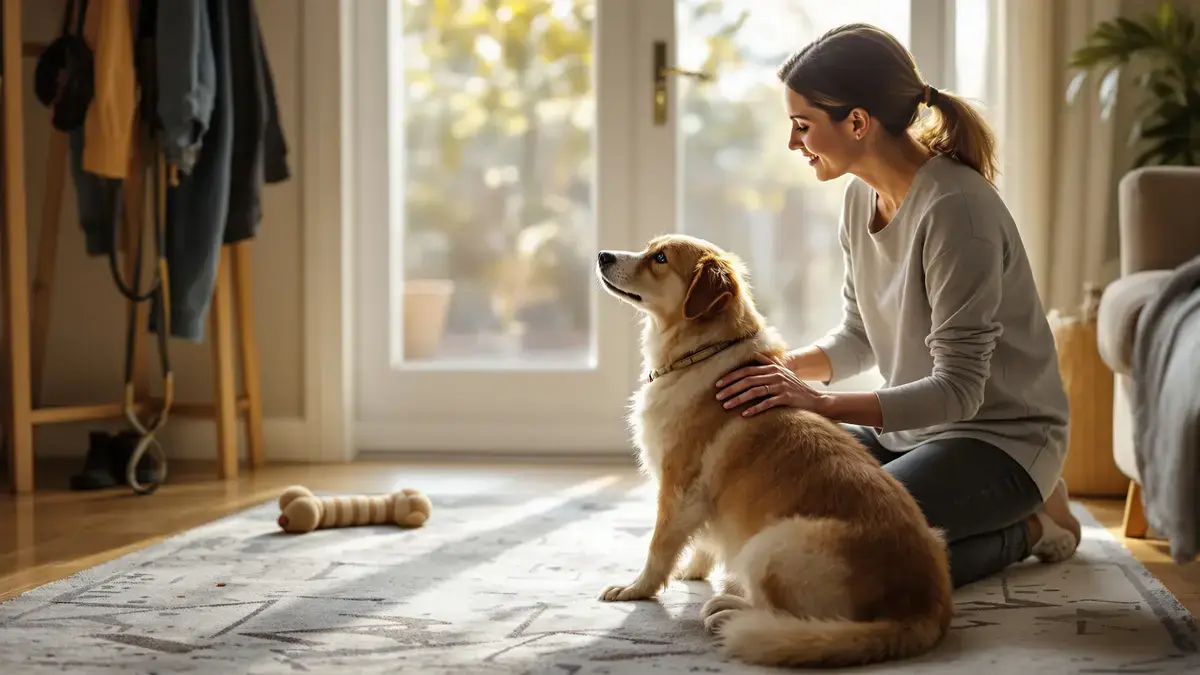

A dog’s world is built from routines—the familiar creak of a door, the scent left on a cushion, the tap of footsteps returning each evening. But when these patterns quietly shift, and a face disappears for months, what truly remains for the one who waits by the window? Here’s why the belief that dogs always remember their former owners may not capture the full story, especially when their days are shaped by new hands and fresh routines.
Everyday Cues: What Dogs Really Notice
A dog might pause at the sound of keys or linger where a scent once was. For them, the present moment is sharp and uncompromised. Unlike humans, they don’t relive memories in words or images. Instead, memory is woven through familiar patterns and sensations—a missing smell on the morning walk, a toy untouched on the living room rug.
But even as dogs can recognize a long-lost owner, they do not catalog events by date. Their experiences rely on what’s immediate: the tone of a voice, the feel of a hand, the rhythm of daily life. This “eternal present” frames their understanding of who is near, who is absent.
The Science of Memory: Bonds That Shape Behavior
Scientists separate short-term and long-term memory for dogs, but there’s something more personal—emotional memory. A dog may not mark time as humans do, but an emotional bond can leave a lasting trace. Memories connected to strong feelings, such as a close relationship, can linger for months or even years.
Episodic memory also plays a role, helping dogs remember both joyful moments and routine events. However, this is not the same as nostalgia. For dogs, the emotional imprint of a person can persist, but without a constant, clear division between now and then.
Attachment and Absence: How Dogs Adapt
When a dog loses a familiar face, the signs might show in subtle ways—a pause before eating, restless pacing at night, or the search for a scent that fades over days. These reactions are less about understanding loss and more about disruption of the expected. Grief in dogs does not mirror human sorrow but unfolds in small behavioral shifts.
Care from new owners, steady routines, and gentle comfort serve to build new memories. Over time, as weeks pass, the weight of the old bond can fade—not instantly, but as a quiet outcome of new habits and environment.
New Attachments: The Role of Age and Experience
Puppies, with fewer experiences to compare, may attach swiftly to new people. Their minds absorb and adapt, drawing close within weeks. Adult dogs move at a slower pace, sometimes taking months to trust and settle.
In both cases, intense new bonds may bring their own risks. If a dog becomes too attached, separation anxiety can emerge, marked by anxious behaviors and distress when a new owner leaves the room.
Why the Present Outweighs the Past
Despite the stories of joyful reunions and grateful recognition after years apart, a dog’s strongest loyalty lies in the present. The environment—today’s sounds, touches, and routines—shapes which memories remain vivid. A new caretaker’s patience and predictability often become the heart of a dog’s world.
The common idea that dogs eternally remember a former owner rarely matches their lived reality. As time, place, and faces change, so does the focus of their emotional world.
The Quiet Power of New Beginnings
A dog’s memory for people is not a fixed ledger of loss or reunion. Instead, it is continually shaped by the world around them. Old bonds may linger, but each day offers new attachments and comforts—reminding us that, for dogs, the most important moment is always the one unfolding now.
