
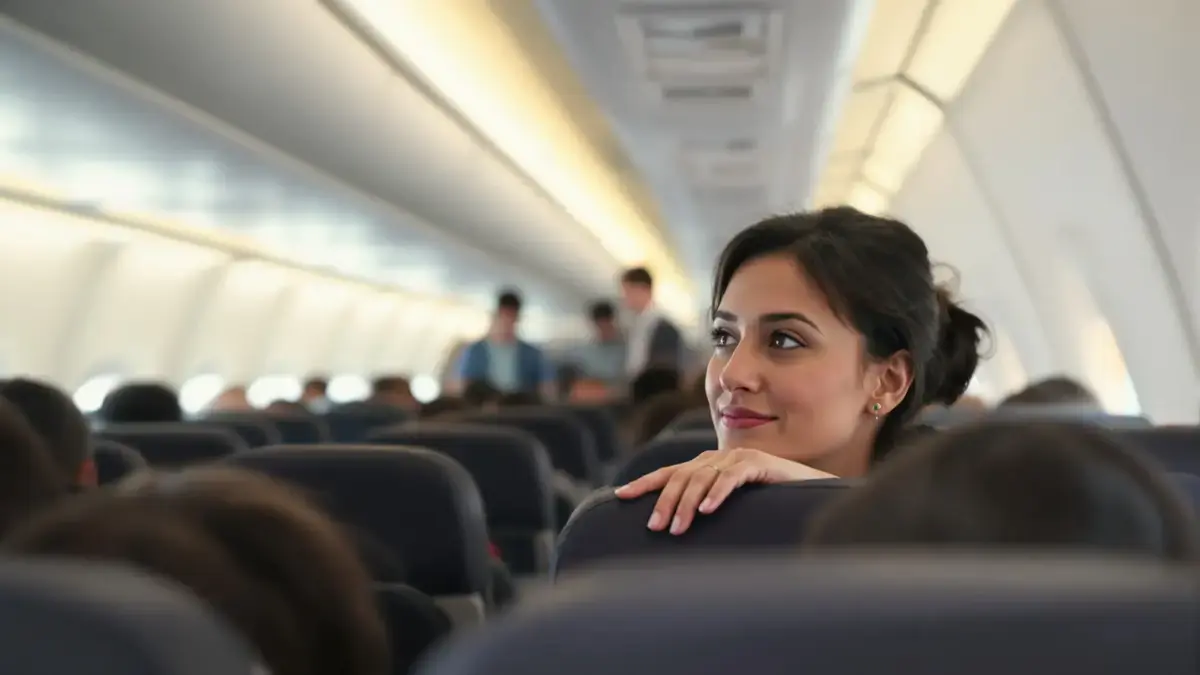

In the narrow hush of an airplane cabin, a familiar routine unfolds. Some passengers slide quickly into aisle seats while others gravitate toward windows, eyes drifting to clouds. This small decision, repeated on countless flights, often goes unnoticed. But beneath the surface, the simple act of choosing where to sit says more about us than we might think—and may even shape how we connect with others.
The Subtle Significance of Seat Selection
Each time travelers board a plane, they make a choice that feels ordinary. Yet, psychologists suggest that a persistent preference for the aisle seat reveals traces of our inner world. Unlike random assignment, the act of selecting a spot carries a psychological weight. The aisle keeps movement possible, offering a clear path to stand or leave at will.
Autonomy as a Source of Comfort
Stepping into a confined space naturally raises questions of control. The concept of autonomous exit—the assurance of being able to leave freely—plays a quiet role here. Studies highlight that when people can move without barriers, even in a crowded space, their nervous system calms, stress lessens. Feeling cornered or blocked, even by something as minor as a neighboring tray table, tends to spark subtle discomfort.
Patterns Beyond the Plane
This urge for autonomy shows up elsewhere too. People may choose seats near doors in restaurants, keep jackets close in new settings, or find comfort by exits in crowded rooms. These actions rarely signal visible anxiety. Instead, they quietly express a need for personal safety and control—simple ways to maintain a buffer in unpredictable spaces.
Early Experiences and Lifelong Habits
For some, the roots stretch back further. Those who grew up in uncertain environments, surrounded by shifting rules or surprises, often develop sharper vigilance about exits and movement. They learn early to assess spaces, keeping options open. In adulthood, this translates into quick glances for the nearest aisle or door, soft habits that ease the mind.
The Aisle as a Psychological Escape Hatch
According to Self-Determination Theory, autonomy is as basic as food or water—a genuine psychological need. Sitting on the aisle is not just about legroom or restroom access; it’s a quiet strategy to stay in control, to feel able to move on one’s own terms. When space is shared and boundaries are set by others, this simple choice helps preserve an individual’s emotional balance.
Trade-Offs in Social Connections
There is a gentle trade-off to consider. Keeping pathways clear can reduce frustration, but it might also distance someone from a companion. The pursuit of freedom sometimes means skipping opportunities for closeness—an open option to leave can come at the expense of sinking fully into the present moment with others beside us.
What Our Choices Reveal
Ultimately, the act of choosing the aisle seat stands as a quiet declaration. Beneath the pursuit of convenience is a deeper story: a search for psychological safety, self-determination, and space to breathe. While the world outside the plane moves on at 35,000 feet, inside, small choices are still shaped by the timeless human need for control.
In daily life and in the air, these preferences persist—reminders of the subtle ways we meet our need for comfort and autonomy, sometimes without a word or conscious thought.
