
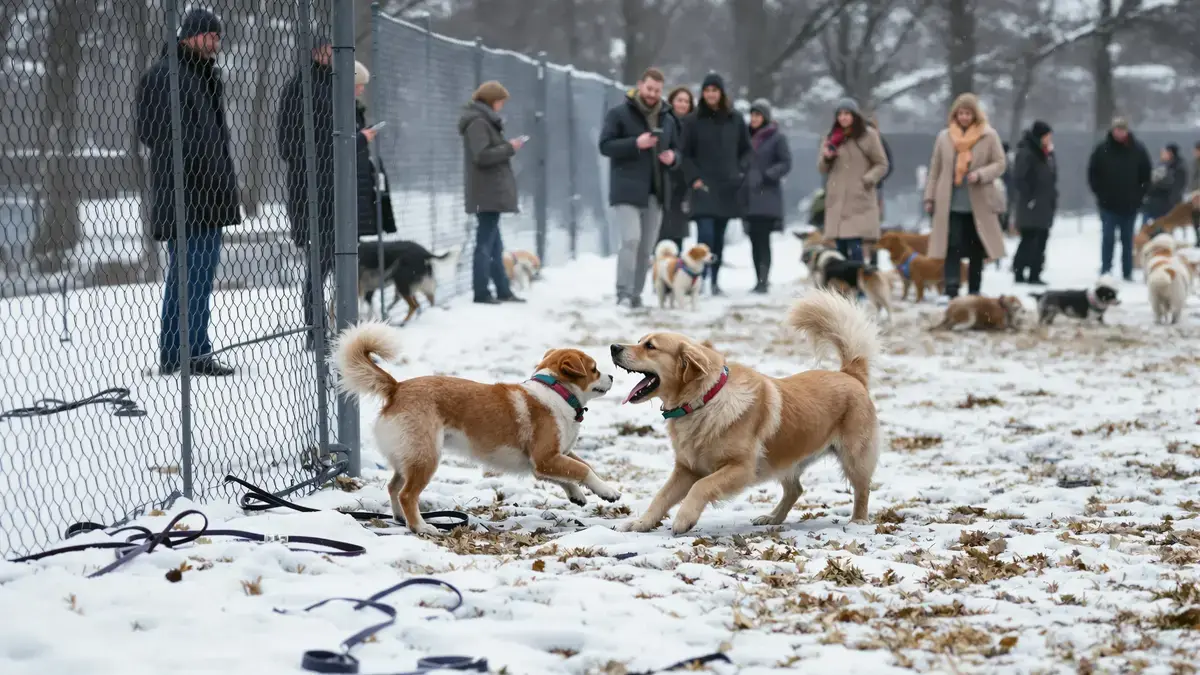

Through the metal fence, a pair of dogs tumble and chase each other, their breath hanging in the frosty air. Nearby, owners tug their scarves higher, scroll through glowing screens, or chat amiably, convinced that the leaping, barking chaos will sort itself out. Yet beneath this casual scene, hidden risks gather—ones even the most caring dog lover may overlook.
Beyond the Playground Illusion
Dog parks, with their open spaces and wagging tails, often seem like guaranteed socialization havens. The idea is simple and appealing: let the dogs play, and nature handles the rest. But real life on cold winter mornings paints a subtler picture. Injuries—sprains, bite marks, small gashes—do not always erupt from dramatic fights. Most arise from brief moments of unchecked excitement on hard or slippery ground, when running paws lose grip or roughhousing escalates too quickly.
A brisk wind stings fingers, urging some owners to stuff their hands deeper into pockets, eyes following texts rather than tails. In the brief space of distraction, dogs take cues from each other, not always reading the room as carefully as hoped. Passive supervision hides a crucial fact: a dog park is not an automatic safety net.
The Thin Line Between Joy and Trouble
Not every tail-wag means happiness. Often, what appears to be harmless fun is actually mounting tension. Clinical records confirm what attentive observation reveals: a quick nip that tears an ear, a tumble ending in a limp. True social play is mutual, with the chase twisting back and forth, roles swapping naturally. If one dog always pursues, while another tries to hide or goes stiff, it's time to look closer.
Goosebumps ripple down a dog's back; a tall, rigid tail slices the air. High, repetitive barking pierces the usual clamor. These are clues, not background noise. Owners who notice when excitement tips over into stress, and calmly intervene—maybe calling for a pause, demanding a brief sit—are quietly preventing emergencies before they begin.
Physical Mismatch, Hidden Hazards
A gangly retriever skids around a lapdog, their bodies vastly mismatched. The difference isn't just visible; it's kinetic. Larger dogs, whether playful or not, bring extra force to everyday play. One miscalculated turn or friendly shoulder and a smaller dog may end up with more than just a scare. Matching dogs by size and play style is not overcautious—it's basic risk management.
Equipment matters, too. Collars dangling loosely or stray leashes trailing across the ground may seem harmless, but they catch, twist, even choke if a paw or tooth gets involved. A snug, well-fitted harness keeps control in the owner's hand and avoids snags, lowering the chance of injury during sudden scuffles.
Active Eyes, Safe Encounters
Weekly, veterinary clinics see the outcome of moments when good intentions fell short. The difference between a happy, tired dog and an emergency visit often lies in seconds of owner engagement. A dog park should be closer to a supervised gym session than a drop-off daycare. Owners’ eyes, alert to shifts in group energy, catch problems before they snowball.
Preventive habits—stepping in early, easing excitement, observing dynamics—are the quiet backbone of peaceful play. The best safeguard for dogs isn’t a fence or a friendly crowd. It’s the person holding the leash, tuning in to the subtle signals that pass between distracted owners.
Responsible Presence
Viewing the dog park as a place requiring steady attention, not just optimism, changes the entire experience. A scan for warning signs, an adjustment of harnesses, and awareness of each dog’s size and energy all add up. Play becomes not just fun but safe, anchored by human vigilance—even on winter’s coldest day.
When owners combine warmth and watchfulness, small joys and rough-and-tumble games become shared rituals, not emergencies waiting to happen. Sometimes, the difference is as simple as putting the smartphone in a pocket, and the hands—and mind—back on the leash.
