
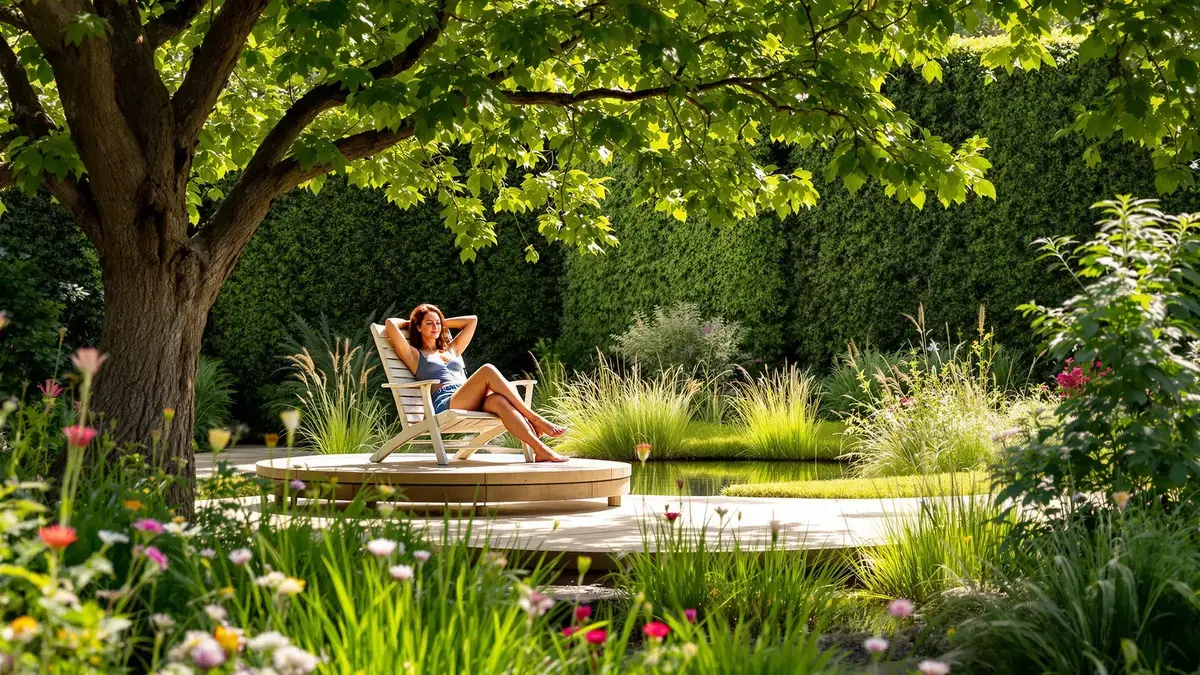

On a scorching afternoon, garden chairs warm quickly and grass dries underfoot. As summer heat swells, finding coolness outdoors becomes a mindful pursuit. The challenge is to shape a garden that not only resists heat, but actively soothes it. Several familiar strategies hold the key, blending foliage, water, and light with practical choices for a more refreshing retreat—if you know where to look.
Trees as Natural Umbrellas
A tree’s leafy canopy breaks sunlight before it touches the ground. Under its shadow, the air feels gentler, less harsh, even as insects move quietly in the branches above. Trees do more than block sun; they reflect and diffuse light, help cool the air through evaporation, and anchor a web of plant life. Planting even a single tree or adding climbing plants offers a living shade that works day after day, season after season.
Biodiverse Hedges and Vertical Greenery
Hedges and mixed plant heights bring texture to the edge of the lawn. These biodiverse hedges weave together different shapes and colors, forming green walls that both buffer wind and hold a line against the sun’s heat. The overlapping leaves raise humidity nearby and invite songbirds or pollinators close to home. Each hedge creates microclimates—a sequence of cooler strips and pockets that make the garden breathe.
Letting Grass Do Its Work
Skipping the mower for a week or two lets grass blades and wildflowers stretch higher. Their movement in the breeze is subtle, but the effect is real: taller grass shades the soil underneath, helping it hold onto moisture instead of baking. It’s possible to mow paths or keep a favorite corner tidy, but leaving parts of the lawn untouched keeps the ground cooler and shelters insects. A garden doesn’t have to feel overgrown—patches of growth and order can exist side by side.
Choosing Materials Wisely
The way a garden feels underfoot often comes down to materials. Concrete reflects harsh sunlight and stores warmth, making it slow to cool once temperatures drop. Wood, on the other hand, stays pleasantly warm rather than hot. A light-colored surface on a wall or patio reflects rays and helps keep spaces more temperate. By steering clear of dark or dense materials, the garden’s hardscape becomes an ally in the quest for freshness.
Shelters and Water: Double Cooling
Sitting under a pergola or beneath the sweep of a fabric shade, one notices how the air stills and cools. These shade devices form artificial canopies, their shadows shifting slowly across the stones. Growing climbing plants along these structures builds up layers of shelter, deepening the cool zone beneath. A pond or small water feature brings the final touch: it raises indoor-like humidity, supports frogs and dragonflies, and creates gentle ripples of fresher air. Water turns a corner of the garden into something like an oasis—a spot to pause, reset, and watch for signs of life.
In gardens shaped by rising heat, smart combinations of plants, water, and well-chosen materials make a real difference. Such settings aren’t just refuges from the sun—they grow into complex, living systems, quietly adapting as the weather changes. Each layer of green and each patch of shade supports a pocket of coolness, transforming everyday routines into lasting comfort.
